What the NEJM Phase 2 Obesity Trial Found About Retatrutide
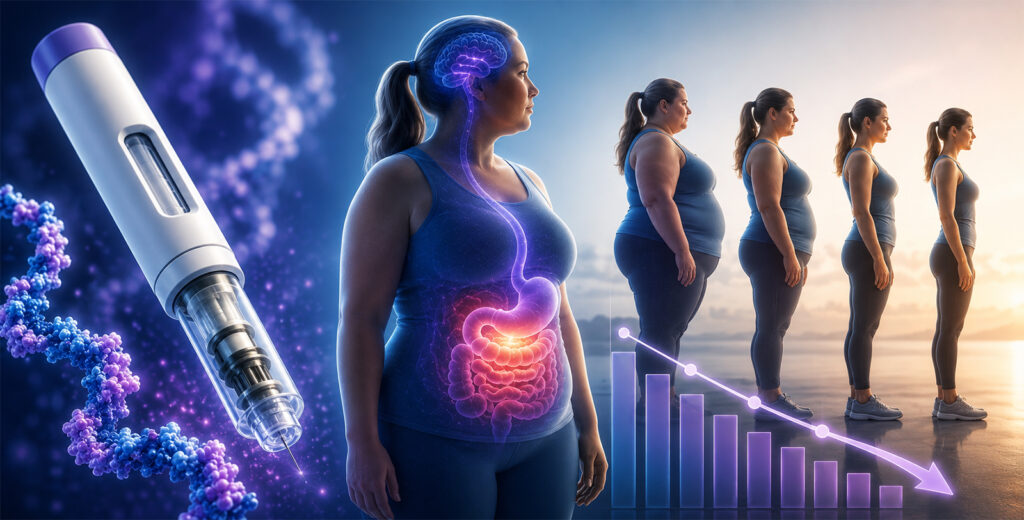
Retatrutide has emerged as one of the most discussed investigational therapies for obesity in recent times. Though this compound is yet to be cleared for regular use, there has been a tremendous amount of interest in it because of the outstanding findings from a ground-breaking Phase 2 clinical trial published in The New England Journal of Medicine (NEJM).
Introduction
While many people have been intrigued by the statistics regarding weight loss achieved in this study, it is essential for those interested in obesity research to know what findings came out of this study and, more importantly, what did not.
This article is an effort to help you understand the basics of the NEJM Phase 2 retatrutide trial.
What Is Retatrutide?
Retatrutide is an investigational compound being developed by Eli Lilly for obesity and weight management.
Unlike earlier molecules that target one or two hormone pathways, retatrutide activates three different receptors involved in appetite and metabolism:
- GLP-1 (Glucagon-Like Peptide-1)
- GIP (Glucose-Dependent Insulinotropic Polypeptide)
- Glucagon
Because it targets three hormone pathways simultaneously, researchers often refer to retatrutide as a “triple agonist”.
Scientists believe this combination may help:
- Reduce appetite
- Increase feelings of fullness
- Improve blood sugar regulation
- Influence energy expenditure
These effects may contribute to significant reductions in body weight.
Why Was the Phase 2 Trial Important?
Before a compound reaches large Phase 3 studies, researchers first need evidence that it works and appears reasonably safe.
The NEJM trial represented one of the largest and most important early studies of retatrutide in adults with obesity or overweight without diabetes.
Researchers wanted to determine:
- Whether retatrutide could produce meaningful weight loss
- How different doses performed
- What side effects participants experienced
- Whether larger studies would be justified
Who Participated in the Study?
The trial enrolled 338 adults.
Participants either:
- Had obesity, or
- Had overweight with at least one weight-related medical condition
Importantly, participants did not have type 2 diabetes.
The average age was approximately 48 years, and participants represented a diverse group of men and women.
Researchers randomly assigned participants to receive:
- Placebo
- Retatrutide 1 mg
- Retatrutide 4 mg
- Retatrutide 8 mg
- Retatrutide 12 mg
All treatments were administered as once-weekly injections.
Randomisation helps reduce bias and increases confidence that differences between groups are due to the treatment rather than other factors.
How Long Did the Study Last?
The primary analysis was conducted at 24 weeks.
Researchers also examined results at 48 weeks, providing nearly a full year of follow-up.
This longer observation period helped researchers determine whether weight loss continued over time.
What Were the Main Results?
The findings attracted significant attention because the amount of weight loss observed was unusually large for a mid-stage clinical trial.
Weight Loss at 24 Weeks
At six months, participants receiving higher doses experienced substantial reductions in body weight. Average weight reductions included:
| Dose | Average weight reduction at 24 weeks |
|---|---|
| Placebo | ~2% |
| 1 mg | ~7% |
| 4 mg | ~13% |
| 8 mg | ~17% |
| 12 mg | ~18% |
These results suggested that higher doses produced greater weight loss.
What Happened at 48 Weeks?
The most remarkable findings emerged at the 48-week analysis. Average weight reductions were:
| Dose | Average weight reduction at 48 weeks |
|---|---|
| Placebo | 2.1% |
| 1 mg | 8.7% |
| 4 mg | 17.1% |
| 8 mg | 22.8% |
| 12 mg | 24.2% |
Researchers noted that participants receiving retatrutide were still losing weight at week 48, suggesting that a weight-loss plateau had not yet been reached.
This observation generated considerable interest because it indicated the possibility of additional weight reduction beyond the study period.
How Many People Achieved Significant Weight Loss?
Researchers also examined how many participants reached clinically meaningful milestones. At higher doses:
Weight Loss of 5% or More
Nearly all participants receiving 8 mg or 12 mg achieved at least 5% weight loss.
Weight Loss of 10% or More
More than 90% of participants receiving the highest doses lost at least 10% of their body weight.
Weight Loss of 20% or More
A substantial proportion of participants receiving 12 mg achieved weight reductions exceeding 20%.
Weight Loss of 25% or More
Nearly half of participants receiving the highest dose lost at least one-quarter of their starting body weight.
Weight Loss of 30% or More
Approximately one-quarter of participants receiving 12 mg achieved weight reductions of 30% or greater.
These results were among the most impressive weight-loss outcomes reported in obesity drug development at the time.
Did Other Health Measures Improve?
Yes. Researchers observed improvements in several cardiometabolic markers, including:
- Waist circumference
- Blood pressure
- Blood lipid measurements
- Blood sugar-related measures
Although weight loss was the primary focus, these additional findings suggest that reductions in body weight may also be accompanied by broader health benefits.
Further studies are needed to determine long-term effects on cardiovascular outcomes and disease risk.
What Side Effects Were Reported?
As with many compounds that target GLP-1 pathways, gastrointestinal symptoms were the most common side effects. Reported adverse events included:
- Nausea
- Vomiting
- Diarrhoea
- Constipation
Most side effects occurred during dose escalation, when participants gradually increased to higher doses.
Researchers reported that side effects were generally similar to those observed with other incretin-based obesity medications. However, higher doses were associated with a greater likelihood of gastrointestinal symptoms.
What Were the Study’s Limitations?
Although the results were encouraging, the study had important limitations.
It Was a Phase 2 Trial
Phase 2 studies are designed to evaluate effectiveness and safety but are not the final step in drug development.
Larger Phase 3 studies are necessary before regulatory approval decisions can be made.
Participants Were Followed for Less Than One Year
Long-term outcomes remain important. Researchers still need to determine:
- Whether weight loss can be maintained
- Long-term safety profiles
- Effects on obesity-related complications
Participants Did Not Have Type 2 Diabetes
The results may not apply equally to people with diabetes. Separate studies are necessary to evaluate different patient populations.
Why Did the Results Generate So Much Attention?
The magnitude of weight loss observed in the trial was unusual.
Historically, anti-obesity medications produced much smaller average reductions in body weight.
The Phase 2 retatrutide trial suggested that a triple-hormone approach might potentially achieve weight reductions approaching those previously associated mainly with bariatric surgery.
Because of these findings, researchers rapidly advanced retatrutide into large-scale Phase 3 clinical programmes.
What Has Happened Since Then?
Following the success of the Phase 2 study, retatrutide entered Phase 3 development. Researchers are currently evaluating:
- Long-term efficacy
- Long-term safety
- Weight maintenance
- Cardiometabolic outcomes
- Comparisons with existing therapies
These studies will provide a clearer understanding of where retatrutide may fit into future obesity research strategies. A summary of the published record is maintained on our Clinical Studies page.
Key Takeaways
From the NEJM Phase 2 study, retatrutide was found to be associated with significant weight loss in obese or overweight adults without diabetes.
The maximum dose level led to a mean body weight reduction of 24% at 48 weeks, with most participants having experienced reductions of up to 20% from their baseline body weights.
Several benefits were recorded on cardiometabolic parameters, even though there were numerous gastrointestinal adverse reactions, especially while increasing doses.
Though there have been impressive results from the research, retatrutide is still a compound in development. Further research at Phase 3 will be needed to establish its safety, efficacy and other clinical parameters prior to any possible approval for use by regulatory agencies.
In the meantime, the Phase 2 study will continue to be one of the most significant studies within the developing field of obesity medicine.
Research & Medical Disclaimer
This article is provided for general informational and educational purposes only and does not constitute medical, clinical or professional advice. Retatrutide is an investigational compound and has not been approved by the FDA, MHRA, EMA or any other regulatory authority. It is not available for prescription outside of authorised clinical trials.
Trial names, statuses and outcomes described here reflect publicly reported information as of June 2026 and may change as additional data becomes available. Figures such as weight-loss percentages refer to specific trial cohorts and dosing arms and should not be interpreted as expected outcomes for any individual.
Always consult a qualified healthcare professional before making any decisions related to medications, treatment or your health. This page is published under our Editorial Policy and Medical Review Process.